

Your driveway gate is more than a decorative entrance. It is a security barrier, a curb-appeal statement, and one of the most-used moving systems on your property. When it starts dragging, stopping halfway, grinding through every cycle, or refusing to open after a Houston storm, homeowners face the same question we hear every week at Garage & Gate Service Pros:
Should I repair my automatic driveway gate or replace it?
Industry content right now is packed with troubleshooting guides, repair vs. replace decision posts, and smart-access upgrade articles. That trend exists for a reason: delaying the wrong decision usually costs more. A sagging swing gate can destroy an opener arm. A weak battery can look like a dead motor. A corroded post can make a brand-new operator fail early. Choosing correctly starts with understanding what is failing, why it is failing, and how that failure fits Houston’s heat, humidity, and storm patterns.
This guide walks through the most common automatic driveway gate problems, clear repair-versus-replacement signals, opener and access-control considerations, and how Garage & Gate Service Pros helps Houston homeowners make a confident, cost-smart call.
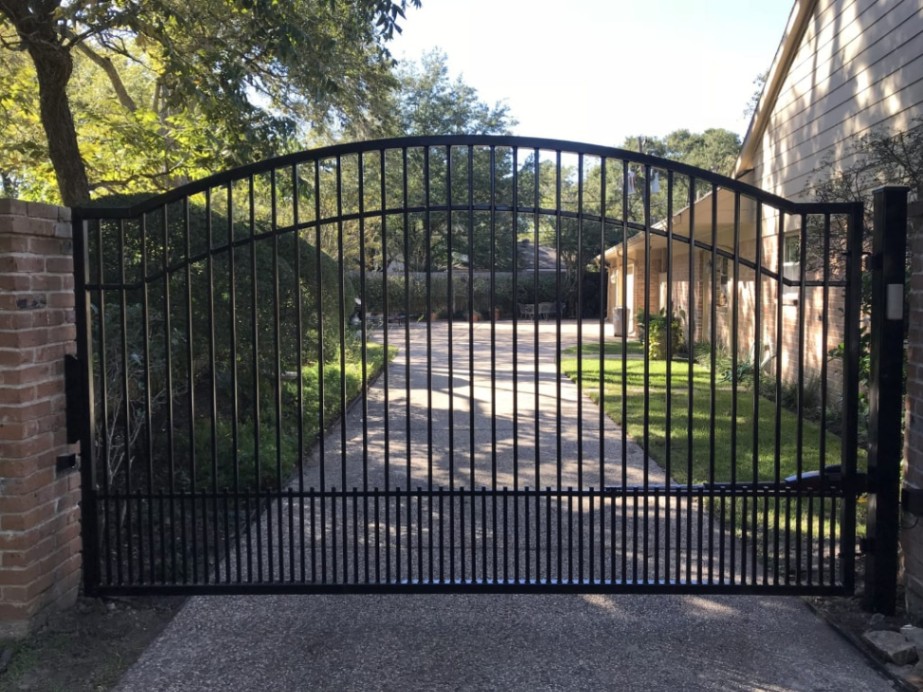
Why driveway gate repair vs replacement is such a common Houston decision
Houston properties put real stress on entry systems. Intense heat expands metal and softens lubricants. Humidity and coastal air accelerate rust on wrought iron and hardware. Storm outages drain battery backups. Heavy rain washes grit into tracks and hinges. Add daily open/close cycles for school runs, deliveries, and guests, and even a well-built gate eventually asks for attention.
That is why residential driveway gate repair in Houston is one of our highest-demand services — and why many customers also ask about new driveway gate installation once they see how far the system has aged.
A good decision framework is simple:
- Identify whether the issue is mechanical, electrical, structural, or a combination.
- Estimate remaining useful life of the gate leaf, posts, hinges, and operator.
- Compare repair cost against the value of a refreshed or fully new system.
- Factor in safety, security, and how often the gate cycles each day.
If a repair restores safe, quiet, reliable operation for years, repair wins. If you are stacking temporary fixes on worn structure, replacement usually wins.
Common automatic driveway gate problems (and what they usually mean)
1. Gate will not open or close
This is the classic “is it the opener or the gate?†problem. Causes include power loss, tripped breakers, dead batteries, failed receivers, jammed hinges, obstructed tracks, or a control board fault. Start with power and safety devices, then move to mechanical freeness. An automatic gate that does not move freely by hand will punish any operator you put on it.
If the opener itself is the weak point, our team handles full gate opener repair for LiftMaster, Viking, DoorKing, Apollo, Nice, All-O-Matic, and other major brands.
2. Sagging or misaligned swing gates
A sagging leaf scrapes the driveway, leaves a latch gap, and overloads the actuator. The root cause is often worn hinges, a shifted post, a twisted frame, or failing hardware after years of Houston heat cycles. Hinge adjustment, post reset, welding, and rehang repairs can bring many gates back into alignment. When the frame is bent beyond practical repair or posts are failing underground, replacement becomes the smarter investment.
3. Sliding gate track, roller, and speed issues
Slide gates that hesitate, chatter, or move slowly often have debris in the track, worn rollers, misaligned guides, or failing drive components. See our slide gate repair page for track, roller, and operator fixes. Cleaning and roller replacement can solve a surprising number of “broken opener†complaints. Persistent binding after track work usually means the leaf or foundation needs structural attention.
4. Noisy operation
Grinding, squealing, and clunking are early warning systems. Dry hinges, failing bearings, loose hardware, and operator gear wear all announce themselves audibly before they fail completely. Lubrication and tightening help — but repeated noise after basic care means parts are wearing out and should be inspected professionally.
5. Opener, battery, and solar failures
Automated systems fail for electrical reasons as often as mechanical ones. Low battery voltage, failed transformers, lightning-damaged boards, weak radio receivers, and aging solar arrays can all leave a gate stranded. Houston thunderstorms make battery backup and surge protection especially important. Our technicians diagnose opener electronics during driveway gate opener service and can recommend repair or replacement based on age, duty cycle, and availability of parts.
6. Sensor, loop, keypad, and remote problems
Gates that open but will not close, reverse randomly, or ignore remotes often have photo-eye issues, loop detector faults, keypad programming problems, or receiver failures. These are frequently repairable without replacing the whole gate — but they are safety-critical and should not be bypassed.
7. Rust, corrosion, and cosmetic structural decay
Surface rust can be treated. Deep corrosion at welds, picket bases, and post boots compromises strength and appearance. If metal loss is advanced, patching becomes a short-term cosmetic fix rather than a long-term structural solution. That is a classic tipping point toward fabrication of a new gate.
Repair vs replacement: the practical decision checklist
Use these signals as a homeowner-friendly scorecard.
Lean toward driveway gate repair when:
- The gate leaf is still structurally sound and square.
- Posts are stable and plumb.
- The problem is isolated (hinges, rollers, board, battery, keypad, photo-eyes).
- The opener is relatively new and still supported with parts.
- A one-time repair restores smooth manual movement and safe automation.
- You are happy with the gate’s style, height, and security level.
Lean toward new gate installation / replacement when:
- The gate is sagging again after recent hinge or post work.
- Corrosion has weakened critical welds or rails.
- Repair quotes approach half or more of replacement cost.
- The opener is outdated, unsupported, or mismatched to gate weight.
- You want better privacy, a custom center design, or modern access control.
- Daily cycles are high and the current system was never built for that duty.
A useful industry rule of thumb matches what many gate companies publish: if repair costs climb past roughly 50–60% of a comparable new system — and the structure is aging — replacement is usually the better long-term value.
Gate opener repair vs new opener installation
Sometimes the gate itself is fine and the operator is the entire problem. Other times the opener is failing because the gate is fighting it.
Professional gate opener repair can resolve:
- Control board failures
- Control arm / actuator issues
- Radio receiver problems
- Battery and solar faults
- Loop detector and limit-switch problems
- Remote and keypad programming
A new opener makes more sense when:
- The motor is worn out after years of high cycles
- The unit is undersized for gate weight or wind load
- You want smartphone control, stronger battery backup, or better diagnostics
- Parts are scarce or repeated board failures keep returning

If you are comparing brands for a new operator, our recent guide on LiftMaster vs Viking is a useful companion read, and we also install and service systems through our LiftMaster gate opener installation service. The best opener recommendation always starts with gate weight, length, swing/slide type, power availability, and expected cycles — not a brand preference alone.
When the decision is about repairing a LiftMaster operator rather than replacing the whole gate, start with our LiftMaster repair page.
How garage door issues fit into the same repair vs replace mindset
Many of our Houston customers manage both systems: a driveway gate at the street and a garage door at the house. The decision logic is similar. A broken torsion spring is usually a repair. A door with multiple bent panels, chronic off-track failures, and an obsolete opener may be a candidate for broader replacement planning.
If your garage door is sticking, slamming, or only rising a few inches before the opener quits, start with garage door repair in Houston and specifically garage door spring repair. Springs counterbalance hundreds of pounds of door weight. DIY spring work is dangerous. Professional replacement restores balance, protects the opener, and prevents secondary damage.
Noisy or unreliable openers often need garage door opener repair or a modern upgrade with quieter belt-drive operation, battery backup, and smart monitoring. Treating garage door and driveway gate maintenance as one property access plan is one of the smartest ways to avoid emergency lockouts.

Houston-specific factors that change the math
Heat and UV
Electronics and plastics age faster in direct sun. Shade, proper enclosures, and correct force settings matter more here than in cooler climates.
Humidity and coastal corrosion
Wrought iron and unprotected steel need coatings and inspections. Waiting until rust eats through a hinge plate turns a refinishing job into a fabrication job.
Storms and outages
Battery backup is not a luxury in Greater Houston. If your gate or garage door leaves you trapped during outages, upgrade planning should include backup power as a core requirement.
Soil movement and posts
Post heave, settling, and leaning are common. A beautiful gate on a failing post is still a failing system. Post reset or replacement is often the hidden key to making either repair or replacement succeed.
What a professional evaluation should include
When Garage & Gate Service Pros inspects a gate, we look beyond the symptom:
- Manual free movement of the leaf
- Hinge, roller, track, and latch condition
- Post plumb and foundation integrity
- Frame squareness and weld health
- Opener sizing vs gate weight and wind exposure
- Safety devices (photo-eyes, loops, reverse settings)
- Power supply, battery health, and surge exposure
- Cycle count expectations and access-control needs
From there we can recommend targeted driveway gate repair, opener service, or a complete new gate installation with automation designed for your property.
Cost factors homeowners should expect (without surprise pricing)
Exact pricing depends on gate size, material, automation level, and access conditions, but these are the cost drivers we discuss transparently:
- Parts vs labor complexity
- Structural welding or post work
- Opener model and accessories (loops, keypads, photo-eyes, battery kits)
- Custom fabrication and finish
- Electrical/solar requirements
- Whether temporary access solutions are needed during the project
Itemized estimates matter. A cheap board swap that ignores a binding gate is not a bargain. A higher upfront replacement that ends years of repeat service calls can be the real savings.
DIY vs professional service: where homeowners should draw the line
Safe DIY steps can include:
- Clearing obvious debris from tracks
- Checking visible keypad/remote batteries
- Confirming breakers and GFCI outlets
- Looking for obvious obstructions in photo-eye paths
- Photographing error lights for the technician
Leave these to professionals:
- Spring-like tension hardware and high-force actuators
- Control board replacement and force/limit programming
- Post resets, welding, and major rehang work
- Bypassing safety devices “just to get it closedâ€
- Undersized opener swaps that can damage a good gate
Safety devices exist to protect people, pets, and vehicles. Skipping them to force a closing cycle is never the answer.
Recommended action plan if your gate is failing today
- Stop forcing the gate if it binds or scrapes.
- Note whether the failure is intermittent, storm-related, or progressive.
- Test remotes/keypads and check for photo-eye alignment issues.
- If the gate is heavy or unbalanced, do not try to muscle it into place.
- Call for a professional inspection before a small issue becomes opener damage.
If you also have garage door symptoms — off-track sections, broken spring bangs, opener that only lifts a few inches — mention both systems when you call. Coordinated service through Garage & Gate Service Pros often saves a second trip and catches related wear early.
Final recommendation: repair what is healthy, replace what is spent
Driveway gate repair is the right move when the structure is solid and the failure is specific. Replacement is the right move when corrosion, repeated sagging, obsolete automation, or escalating repair costs mean you are funding the same problem every season.
The trending industry conversation around repair-versus-replace exists because homeowners are tired of temporary fixes. A clear inspection, honest estimate, and correctly sized automatic gate system restore security and convenience without guessing.
Garage & Gate Service Pros serves Houston and surrounding communities with driveway gate repair, automatic gate opener repair, new gate installation, and garage door service backed by experienced technicians and emergency repair. If your gate is stuck, noisy, slow, or barely hanging on after the last storm, call 281-928-1837 or request service through garageservicepros.com. We will tell you plainly whether repair or replacement is the smarter path and get your entry working the way it should.