

Your garage door spring does almost all of the lifting every time the door opens. The opener just guides it. When a spring is worn out, the door usually tells you before the spring actually breaks. The trick is knowing what to look and listen for.
This guide walks through the 5 most common warning signs, what each one means, what you can safely check yourself, and when it is time to call a pro. We also explain why cooler mornings can be the moment a tired spring finally lets go.
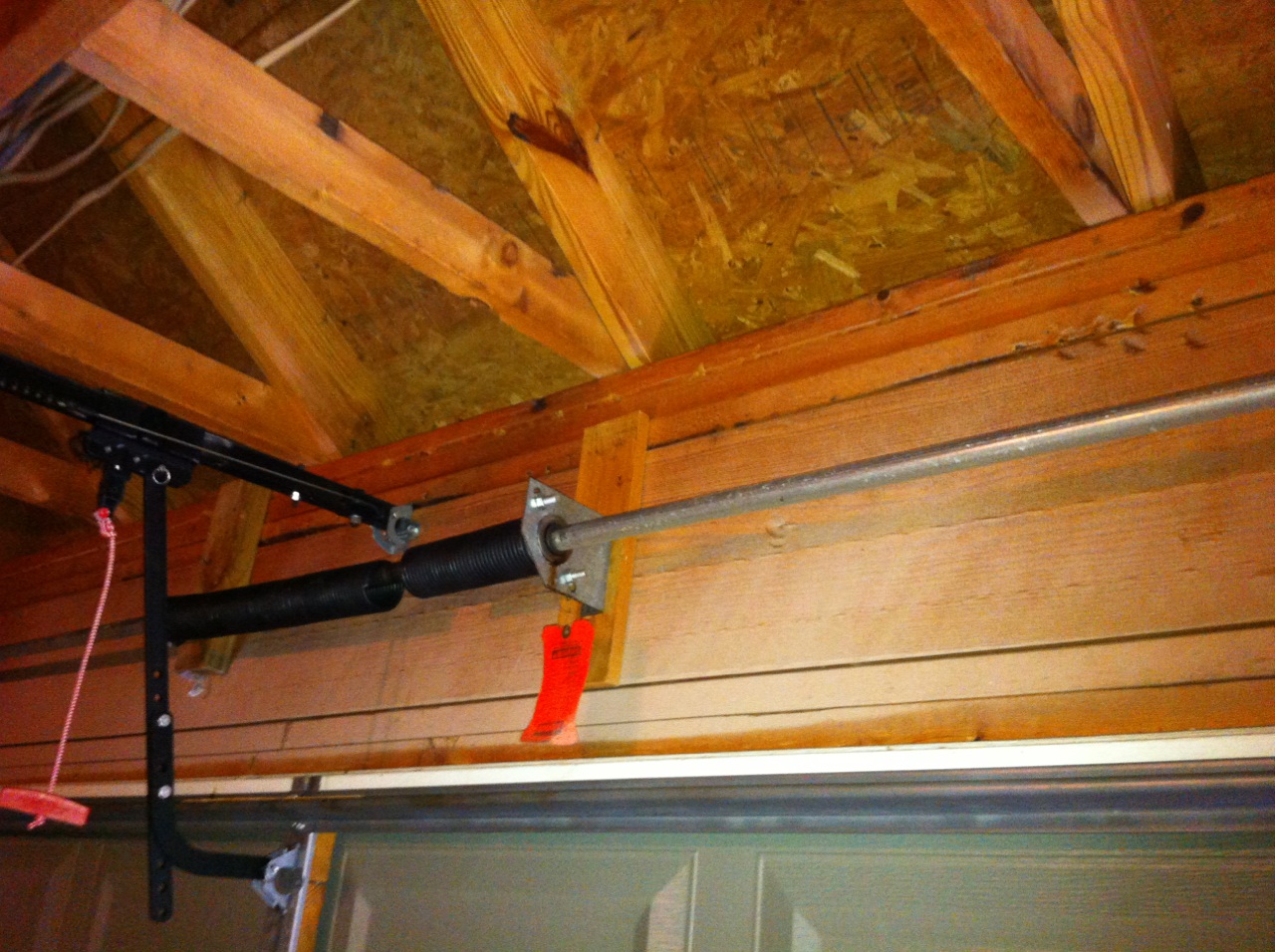
Broken torsion spring we replaced in The Woodlands.
Why Garage Door Springs Wear Out
Most residential doors use torsion springs mounted on a bar above the door, or extension springs that run along the horizontal tracks. Either way, the spring is wound under heavy tension so it can counterbalance the full weight of the door.
Every open and close is one cycle, and springs are only built for so many. Clopay, one of the largest garage door manufacturers, says springs are usually rated for about 10,000 cycles, and suggests replacing them after 7 or more years of daily use. If your household opens and closes the door 3 or 4 times a day, that adds up faster than most people think.
Why cooler mornings matter
Clopay notes that spring breaks happen more often in colder months because the spring wire becomes more brittle. Service Spring, a spring manufacturer, says worn springs that are already near the end of their life are far more likely to fail during a sudden cold snap.
Houston does not get much true winter, and that is not the point here. The point is that a spring that is already tired can give out on the first cooler morning of the season. A healthy spring is not the worry. A worn one is. That is why the warning signs below matter more than the forecast.
Torsion Springs vs Extension Springs: What You Might Have
Knowing which type of spring your door uses helps you know where to look.
Torsion springs
Torsion springs sit on a metal bar mounted to the wall just above the closed door. They twist to store energy as the door closes and unwind to help lift it. Most newer homes in the Houston area have torsion springs. When one breaks, you will usually see the gap in the coil right away.
Extension springs
Extension springs run along each side of the door, above the horizontal tracks, and stretch as the door closes. They are common on older doors. Signs of wear include coils that look stretched or uneven, rust, or a spring that hangs loose. Extension springs should always have a safety cable running through the middle so a broken spring cannot fly across the garage. If you do not see one, mention it to your technician.
5 Warning Signs Your Garage Door Spring Is Close to Failing
1. The door feels heavy or the opener strains
A balanced door should feel fairly light when you lift it by hand. If the opener sounds like it is working harder than usual, slows down, or the door feels much heavier than it used to, the spring may be losing tension. The opener is not designed to lift the full weight of the door, so a weak spring also wears out the opener faster.
2. The door goes up crooked or stops partway
If one side of the door rises faster than the other, or the door starts up and then stops or reverses, a spring may be weak or broken. On doors with two springs, one can fail while the other keeps working, which makes the door lift unevenly. Clopay lists a door getting stuck partway as a common sign of a spring problem.
3. You heard a loud bang or pop from the garage
A breaking torsion spring often sounds like a gunshot or a loud pop. Many homeowners hear it, look around, see nothing wrong, and keep using the door. Clopay notes that a popping noise may be the spring breaking. If you heard a bang from the garage and the door is acting different afterward, stop using it.
4. You can see a gap in the coil
This is the clearest sign of all. Look at the torsion spring above the door from a safe distance. A healthy spring is one tight, continuous coil. A broken spring will show a gap of a few inches where the coil has snapped and separated. Do not touch it. Just look.
5. The door slams shut or will not stay put
A properly balanced door should close smoothly and, on most doors, stay roughly in place when lifted halfway by hand. If the door drops quickly, slams down, or will not stay where you leave it, the spring is not holding the weight anymore. This is also a safety issue, because a door falling fast can hurt someone or damage a car.
What To Do If You Notice a Warning Sign
If you notice any of the signs above, here is what we recommend, in order:
- Stop using the opener. Running the opener against a broken spring can damage the opener and the door.
- Keep people, pets and cars clear of the door. A door with a broken spring can drop suddenly.
- Look, do not touch. From the floor, check for a gap in the coil above the door and note whether the cables look loose.
- Leave the door where it is if you can. If your car is stuck inside, call us before trying to force the door open.
- Call a trained technician to inspect both springs and the cables while they are there.
Can I Replace a Garage Door Spring Myself?
We strongly recommend against it. Clopay states plainly that springs are not a DIY job. Torsion springs hold a large amount of stored energy, and adjusting or removing them without the right winding bars and training is how people get seriously hurt.
What you can safely do yourself:
- Watch and listen to the door each time it runs.
- Look at the springs from the floor for gaps, rust or stretched coils.
- Keep track of how old your door and springs are.
- Schedule a tune-up if the door is 7 or more years old and has never had the springs checked.
What to leave to a pro: winding, unwinding, adjusting or replacing any spring, and any work on the cables, bottom brackets or drums attached to them.
Why We Usually Recommend Replacing Both Springs
If your door has two torsion springs and one breaks, the other has usually done the same number of cycles. That means it is likely close behind. Replacing both at once keeps the door balanced and saves you a second service call later. Our team will explain what we find and give you up-front pricing before any work starts.
How a Spring Tune-Up Helps
A tune-up is a good idea before a spring fails, not just after. During a tune-up, a technician will:
- Check spring tension and door balance.
- Inspect the cables, drums and bottom brackets for wear.
- Lubricate the springs, hinges and rollers.
- Test the opener force settings and the safety reverse.
- Let you know if anything looks close to the end of its life.
If your door is older and you have never had the springs looked at, a quick check now can save you from a door that will not open on a busy morning.
Frequently Asked Questions
How long do garage door springs last?
Clopay says most springs are rated for about 10,000 cycles and suggests replacing them after 7 or more years of daily use. Heavier doors and doors used many times a day can wear springs out sooner.
Does cooler weather really break garage door springs?
Cooler weather does not break a healthy spring by itself. Clopay notes spring wire becomes more brittle in colder months, and Service Spring says worn springs near the end of their life are more likely to fail during a sudden cold snap. In Houston, the real risk is an already-worn spring meeting the first cooler mornings of the season.
What does a broken garage door spring sound like?
Usually a loud bang or pop, a lot like a firecracker, coming from above the door. After that, the door often feels very heavy or the opener cannot lift it.
Can I still open my garage door with a broken spring?
We do not recommend it. Without the spring, the door is carrying its full weight, which can strain or damage the opener and can make the door drop suddenly. Stop using it and call for service.
Should I replace one spring or both?
If you have two springs, we usually recommend replacing both. They have done the same number of cycles, so the second one is often close to failing too.
Need Your Garage Door Springs Checked?
If you heard a pop, see a gap in the coil, or your door has started acting heavy or crooked, stop using it and let us take a look. Our trained and insured technicians handle garage door spring repair across Houston and surrounding areas, with up-front pricing, a workmanship warranty, and same-day spring replacement in most cases.
Call Garage & Gate Service Pros at 281-928-1837 or request service online for same-day spring replacement in most cases, and we will get your door working safely again.